



Introduction: The New Era of Sustainable Farming
Across Europe, farmers are facing a dual challenge: increasing productivity while reducing environmental impact. Conventional inputs alone are no longer sufficient to meet the demands of modern agriculture.
This is where Biostimulants come in as natural, science-based tools that help crops perform better under stress, use nutrients more efficiently, and improve both yield and quality.
Are Biostimulants Fertilizers?
Biostimulants are substances or microorganisms that enhance plant growth and resilience, independently of their nutrient content.
Unlike fertilizers, which directly supply nutrients, Biostimulants activate natural plant processes, improving nutrient uptake, stress tolerance, and overall crop performance.
Biostimulants can be divided into two categories:
- Elemental Biostimulants: Derived from inorganic, mineral-based sources such as Silicium, Titanium, and Cobalt, these substances enhance the plant’s resilience to environmental stress.
- Molecular Biostimulants: Extracted from organic sources, these substances further promote plant growth by stimulating natural biological processes.
Common types of Molecular Biostimulants include:
- Seaweed extracts: rich in hormones and bioactive compounds.
- Amino acids & peptides: enhance metabolism and recovery after stress.
- Humic & fulvic acids: improve soil structure and nutrient availability.
- Microbial inoculants: beneficial bacteria and fungi that boost root activity.
Why Are Biostimulants Gaining Ground in Europe?
The European Green Deal and Farm to Fork Strategy push for reduced chemical inputs and greater sustainability.
Biostimulants are now seen as essential tools to achieve these goals, helping farmers maintain profitability while complying with environmental standards.
Key market drivers:
- Rising regulatory pressure on fertilizers and pesticides.
- Escalating occurrence of drought and heat stress conditions.
- Growing demand for higher-quality, residue-free products.
- Proven performance in high-value crops like vegetables, vines, and orchards.
What Biostimulants Do in Practice
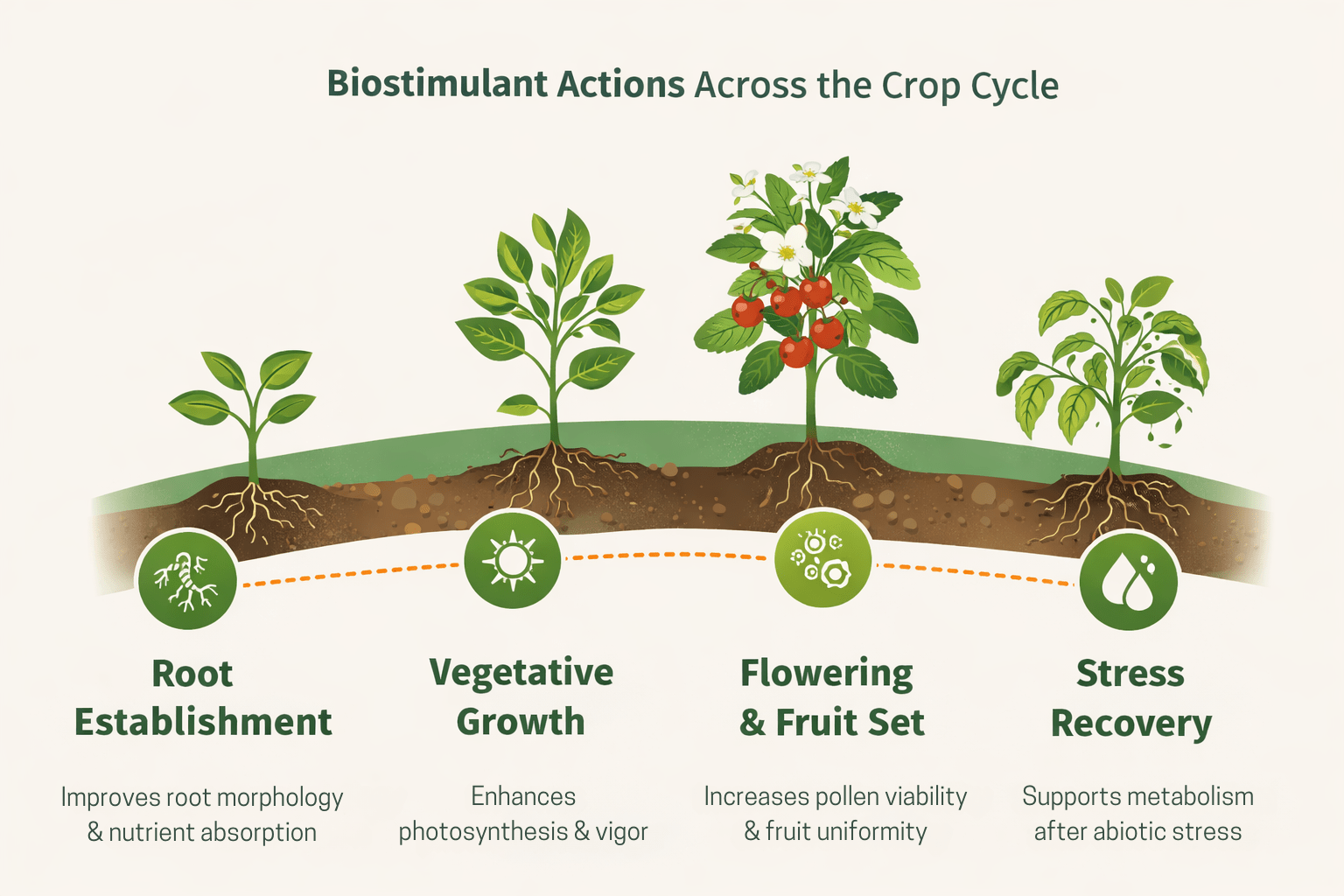
Biostimulants contribute to improved crop performance by supporting key physiological functions throughout the crop cycle. Furthermore, Biostimulants help plants respond more effectively to growth demands and environmental pressures at critical development stages, including:
- Root establishment: improve root morphology and nutrient absorption.
- Vegetative growth: enhance photosynthesis and vigor.
- Flowering & fruit set: increase pollen viability and fruit uniformity.
- Stress recovery: support metabolism after abiotic stress (drought, salinity, high/low temperature).
What to Look for When Choosing a Biostimulant
When selecting a biostimulant, European farmers should consider:
- Scientific validation: field-trial data under local conditions.
- Product formulation: stability, compatibility, and application ease.
- Regulatory compliance: alignment with EU Regulation (2019/1009).
- Technical support: guidance from agronomic experts.
Agrology Approach: Science-Driven Biostimulation
At Agrology, biostimulation is not a trend — it’s who we are.
Our R&D team develops targeted biostimulant solutions combining high efficiency with modern formulation technology.
Through numerous field-proven trials and Smart Solutions, we help farmers achieve greater yield stability and improved crop quality in a sustainable way.
👉 Discover Agrology Biostimulant Products
👉 See Results from Field Trials
Conclusion
Biostimulants are redefining modern plant nutrition across Europe.
As agriculture moves toward sustainability and efficiency, these innovative tools will play a central role in ensuring resilient, productive, and profitable farming systems.