





Introduction: When Global Politics Reaches the Farm
Agriculture has always been influenced by weather, soil conditions and seasonal cycles. Today, however, another powerful factor increasingly shapes the future of farming: geopolitics.
Recent global events, including the ongoing conflict involving Iran and rising tensions in key energy and trade regions, highlight how interconnected the agricultural sector has become with global economic and political developments.
What happens thousands of kilometers away from a farm can now directly influence fertilizer prices, fuel costs, supply chains, and ultimately food production worldwide.
Why the Middle East Matters for Global Agriculture
The Middle East plays a strategic role not only in global energy markets but also in the production and distribution of fertilizers and agricultural inputs. Countries in the region are major producers of nitrogen fertilizers, ammonia and other key nutrients essential for modern agriculture.
The current conflict involving Iran has raised concerns about the stability of the Strait of Hormuz, one of the most critical maritime trade routes in the world. Nearly 20% of global oil supply passes through this corridor, making it a vital artery for international trade.
When tensions escalate in this region, the effects quickly ripple through global markets.
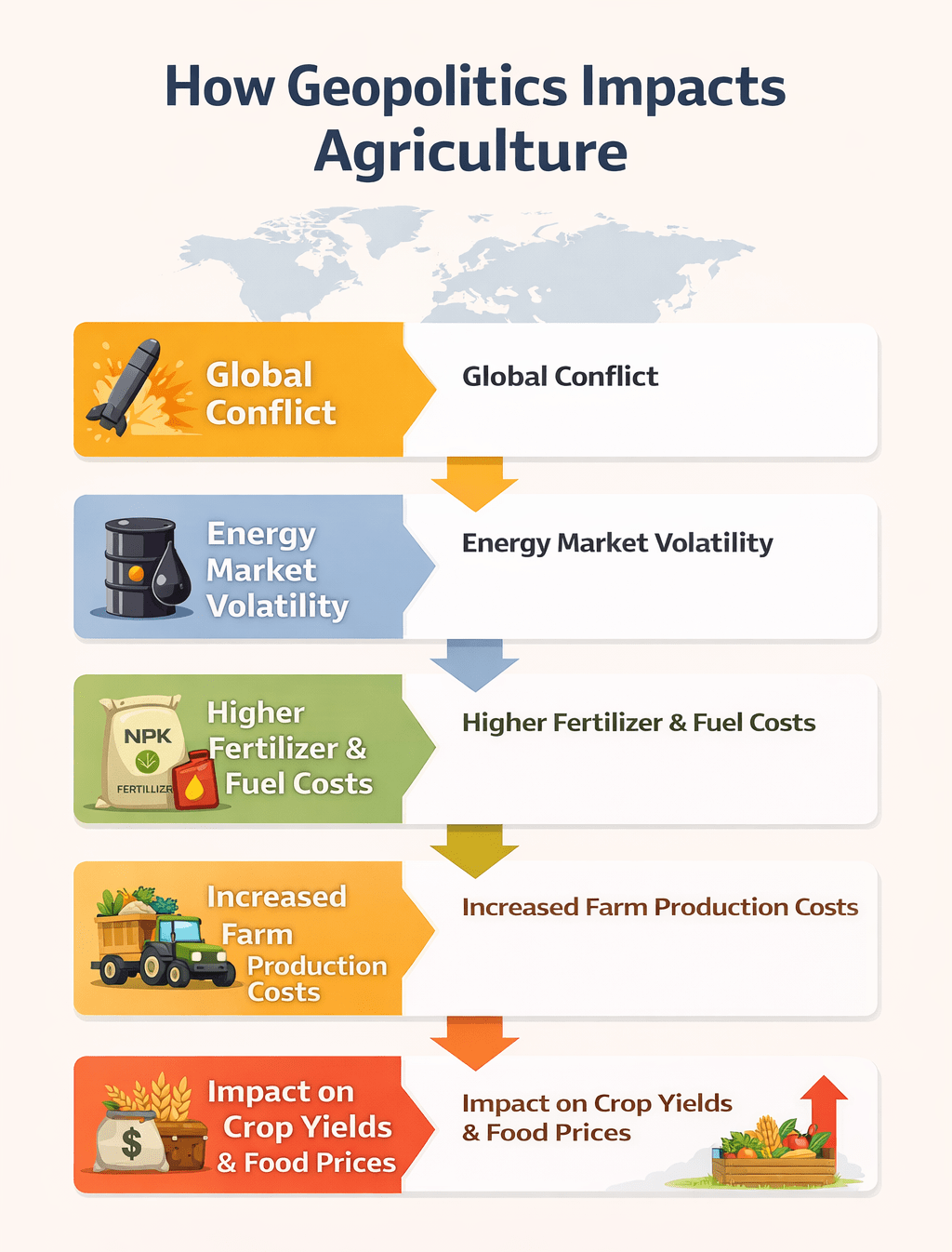
Rising Energy Prices and Their Impact on Farming
Energy is one of the most important cost drivers in agriculture. Oil and natural gas influence:
- Fuel for tractors and agricultural machinery
- Transportation of crops and food products
- Production of nitrogen-based fertilizers
Recent developments in the Iran conflict have already pushed global oil prices upward and increased volatility in energy markets.
For farmers, this means higher production costs, particularly during key agricultural seasons when fertilizers and fuel are required in large quantities.
Fertilizer Markets Under Pressure
The Middle East is also a major hub for fertilizer production and export. Disruptions in the region can significantly affect global fertilizer availability and pricing.
Analysts warn that ongoing tensions could cause fertilizer price spikes, especially as farmers in the Northern Hemisphere prepare for seasonal applications.
The timing of such disruptions is particularly critical. Conflicts occurring during planting or fertilization periods can create immediate pressure on farm budgets and crop planning decisions.
Higher fertilizer costs can lead to:
- Reduced nutrient application rates
- Lower crop yields
- Increased food prices for consumers
Supply Chain Vulnerability in the Global Food System
Modern agriculture relies heavily on globalized supply chains. Seeds, fertilizers, crop protection products and agricultural equipment often travel thousands of kilometers before reaching farms.
Conflicts that threaten major shipping routes or international logistics networks can disrupt these flows. Economists warn that geopolitical tensions could place additional strain on global supply chains that have already faced years of disruption.
For the agri-food sector, such disruptions may translate into:
- Delays in farm input deliveries
- Increased transportation costs
- Volatility in agricultural commodity markets
A Sector Increasingly Exposed to Global Risks
The agricultural sector is becoming increasingly exposed to multiple global risks at the same time:
- Climate variability
- Energy market instability
- Geopolitical conflicts
- Supply chain disruptions
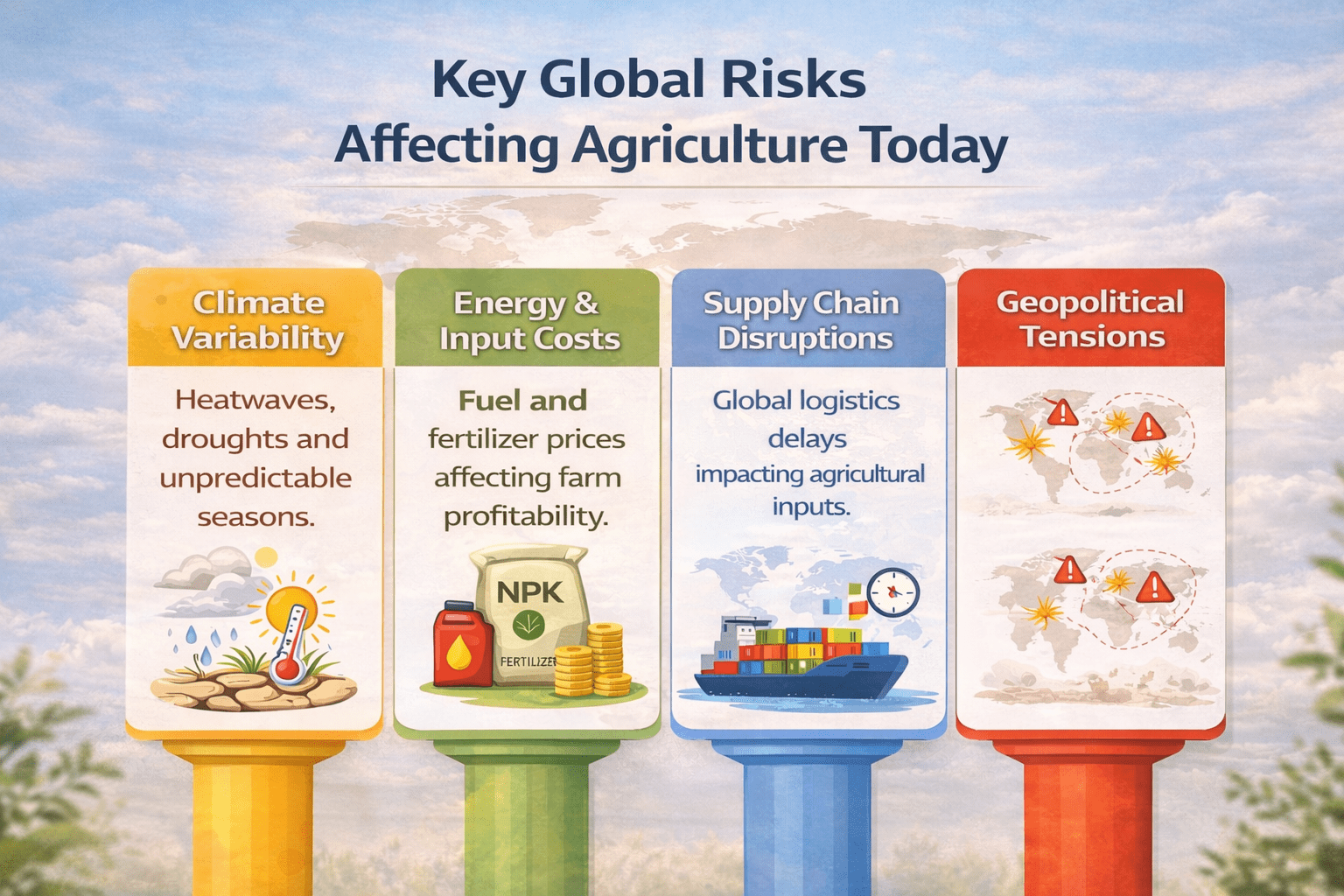
These factors interact with one another, creating a more complex operating environment for farmers, agronomists and agricultural companies.
For example, a conflict-driven increase in fertilizer prices can coincide with climate stress or drought, amplifying the impact on crop production.
Innovation and Resilience in Agriculture
Despite these challenges, agriculture continues to adapt.
Farmers and agribusiness companies (like us!) are increasingly investing in technologies and strategies that improve resilience, such as:
- more efficient crop nutrition solutions
- biostimulants and stress-tolerance technologies
- precision agriculture tools
- sustainable soil management practices
These innovations help crops perform more efficiently even under uncertain conditions, allowing farmers to maintain productivity despite external pressures.
Conclusion
The global agri-food sector is no longer influenced solely by climate and seasonality. Geopolitics has become a key factor shaping agricultural markets and production systems.
Events such as the current tensions in the Middle East demonstrate how closely connected energy markets, fertilizer supply chains and food production have become.
In this increasingly complex environment, building a resilient agricultural system will depend on innovation, efficient resource management and strong global cooperation across the food supply chain.
Sources:
- The Middle East’s strategic role in global fertilizer supply – 2025 outlook | AgriTech Middle East & Africa – Trends in Investments, Innovation & Sustainability in the Agriculture Industry
- U.S.-Iran Conflict Pushes Oil Higher, Pressuring Global Ag Markets
- Iran war disrupts oil and gas flows, highlighting energy security risks | AP News
- Iran conflict threatens fertilizer supplies, raising food costs
- Iran war adds new layer to supply chain stress