




Agrology Success Stories – Increase in Total Yield and Improvement in Quality Characteristics in Cotton
Through Agrology Success Stories in Greece and Abroad, it is proven that the superior quality and integrated innovative technologies of Agrology’s Functional Crop Nutrition® products, make a difference in crops from the very first applications!
Our goal is to demonstrate that Agrology’s Functional Crop Nutrition® Programs are a profitable investment for farmers, as the financial benefits exceed the extra cost of supplemental applications!
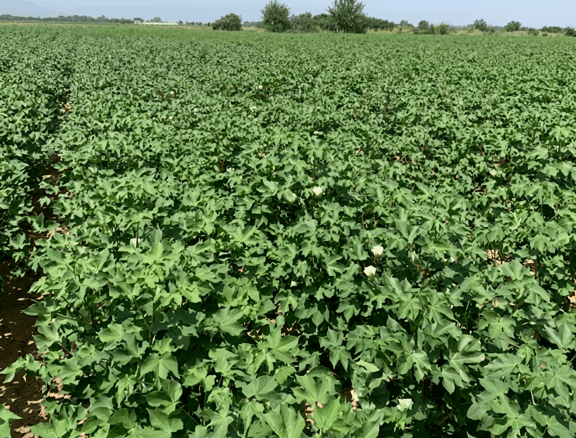
One such Success Story was carried out in Cotton, var. Fidel (SS_2025_268_GR) in 2025, in collaboration with the Commercial Store of Agricultural Supplies and Nutrimaster® “Mpokas Efstathios”, in the region of Pella. Throughout the process, the farmer benefited from the continuous guidance and support offered by Agrology’s Technical Department and the collaborating agricultural store.
The crop area was divided into two equal plots, one was used as Control, while Agrology’s Program was applied to the other plot. In both plots, the farmer used the same plant protection and plant nutrition-fertilization program, apart from additional applications with Agrology’s Functional Crop Nutrition® products.
Identity of Success Story
- Cultivation Period: 2025
- Location: Galatades, Pella
- Nutrimaster®: Mpokas Efstathios
- Farmer: Nikos Charalampidis
- Cultivation: Cotton
- Variety: Fidel
- Success Story area: 2.5 + 2.5 ha (Agrology + Control)
- Plant Protection Program: Common to the entire area
Success Story Goals
By applying Agrology’s Functional Crop Nutrition® products during specific growth stages, the farmer can achieve significant agronomic benefits for the crop.
The main Objectives of this Success Story were as follows:
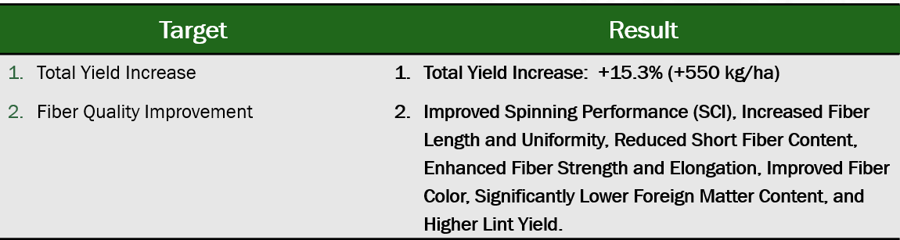
- Total Yield Increase
- Improvement in Cotton Quality Characteristics
Agrology Functional Crop Nutrition® Program – Cotton
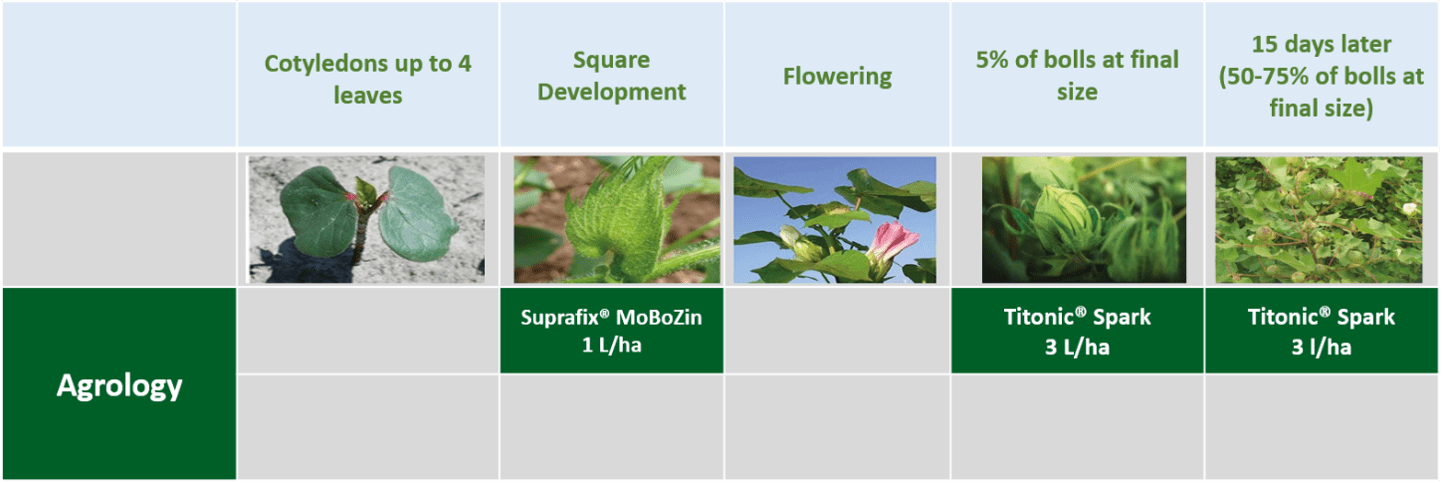
Functional Crop Nutrition® Program – Agrology Supplementary Applications
Products

Molybdenum, Boron and Zinc formulation, enhanced with SmartFlow® & E2DA® Technology, ideal for foliar application and for use with drip irrigation (Mo: 1% w/v, B: 15% w/v, Zn: 30% w/v):
- Flowering and boll-setting Enhancement (Zn, B)
- Promotion of plant Vegetative Growth (Zn, Mo)
Application timing
- Square Development
Recommended Dosage:
Foliar application – 1 L/ha, Spray Volume: 200-300 L/ha

Functional Crop Nutrition® product, in liquid form, rich in Phosphorus & Potassium, enhannced with Boron & Molybdenum and further enriched with the bioactive Titanium of the E-PerForm® Technology:
- Increased Boll Size and Boll Weight (K)
- Promotion of Boll Maturation (P)
- Improved Fiber Quality Characteristics (Improved Fiber Length and Fineness) (P, K)
Application timing:
- 5% of the bοlls have reached their final size
- 15 days later (when 50-75% of the bοlls have reached their final size)
Recommended Dosage
Foliar application – 3 L/ha, Spray Volume: 300-500 L/ha
Success Story Results
Measurements on both plots revealed impressive results in the Agrology treatment. Specifically, the results were as follows:
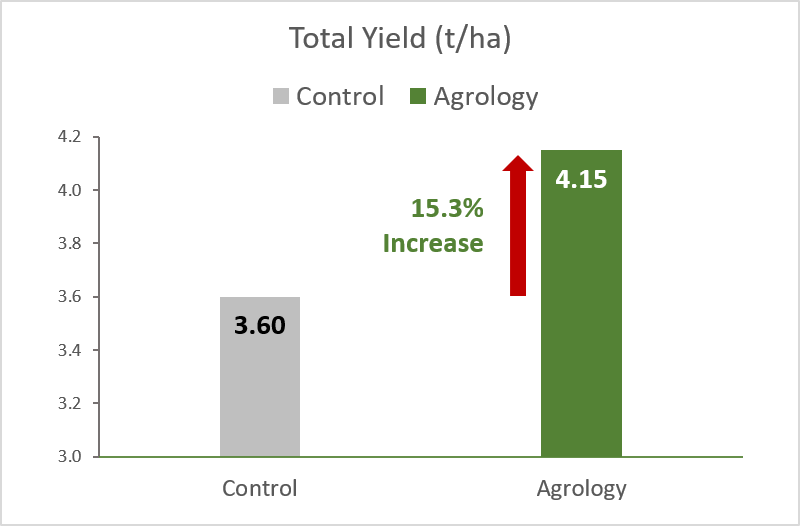
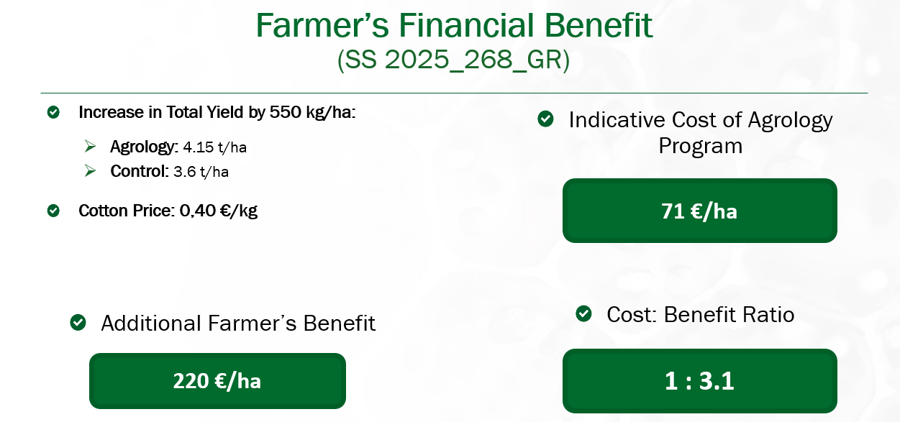
- Increase in Total Yield by 15.3% (+550 Kg/ha)
- Agrology: 4.15 t/ha
- Control: 3.6 t/ha
2. Improvement of Fiber Quality Characteristics
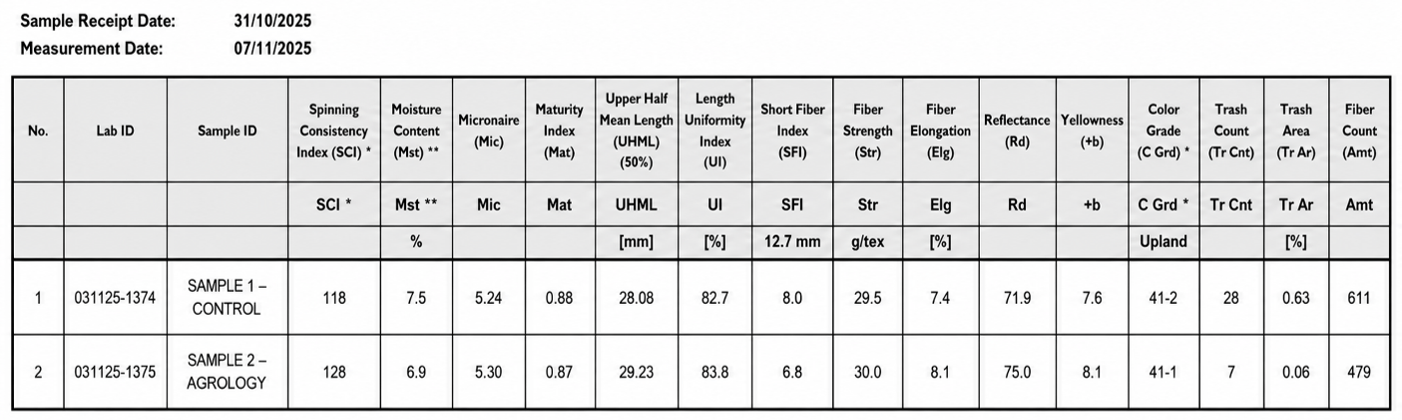
a. Spinning Consistency Index (SCI) (+10 points)
The SCI is an indicator of both spinning performance and commercial value. The Agrology sample demonstrated superior spinning performance, resulting in:
- Greater yarn stability
- Fewer yarn breakages during spinning
- Higher processing efficiency and productivity
b. Upper Half Mean Length (UHML) (+1.15 mm)
UHML represents the average length of the longest 50% of fibers. The Agrology sample exhibited a significantly greater fiber length, providing:
- Improved yarn cohesion
- The ability to produce finer and stronger yarns
- A superior fiber length class, suitable for high-speed spinning operations
c. Length Uniformity Index (UI)
The UI expresses the uniformity of fiber length distribution. An Agrology UI value >83% is considered excellent, indicating:
- Superior fiber length uniformity
- Reduced yarn variability
- Improved final fabric quality
d. Short Fiber Index (SFI)
The SFI represents the percentage of fibers shorter than 12.7 mm. Short fibers contribute poorly to spinning, increase waste generation, and weaken yarn quality.
Compared with the Control, the Agrology sample showed a 1.2 percentage point reduction in SFI, indicating:
- Improved fiber maturation and harvesting quality
- A noticeably superior and technically cleaner fiber
e. Fiber Strength (Str, g/tex)
Fiber Strength measures the tensile resistance of the fiber and directly influences spinning speed and yarn strength.
Agrology value: 30 g/tex
Results indicate:
- Excellent fiber strength
- Performance approaching the highest quality category
- A more durable and resistant fiber
f. Fiber Elongation (Elg)
Fiber Elongation expresses the ability of fibers to elongate before breaking.
Compared with the Control, the Agrology sample showed an increase of 0.7 percentage points, resulting in:
- Improved absorption of mechanical stresses
- Fewer yarn breakages during spinning
- Greater fiber elasticity, particularly beneficial for demanding textile processing operations
g. Color Grade (Rd / +b)
- Rd: Reflectance (brightness)
- +b: Yellowness
Agrology Color Grade: 41-1
This classification indicates:
- A higher commercial grade
- Whiter fibers
- Brighter fibers with lower yellowness
h. Trash Count and Trash Area
Foreign matter increases ginning costs and reduces yarn quality.
Compared with the Control, the Agrology sample exhibited substantially lower levels of foreign matter, indicating:
- An exceptionally clean sample resulting from superior crop management and harvesting practices
- Improved boll opening before harvest
i. Fiber Count (Amt)
A higher fiber count (Amt) is generally associated with a greater proportion of short fibers, shorter average fiber length, and lower spinning efficiency.
The Agrology sample demonstrated:
- Significantly lower fiber count
- Superior fiber quality
- Improved yarn structure, higher spinning performance, and greater technical and commercial value
j. Fiber and Seed Yield

- Fiber yield: It represents the percentage of lint obtained from seed cotton and is therefore a key indicator of cotton processing efficiency and economic value. Even an increase of approximately 0.7% is considered significant, as it results in a greater amount of lint produced per kilogram of seed cotton.
- Seed Yield: Although the Control treatment produced a higher seed yield, cottonseed has a considerably lower commercial value than lint. Since lint is the primary source of revenue in cotton production, the higher lint yield achieved by the Agrology Program provides a greater economic return to growers.
Results’ Synopsis
Farmer’s Financial Benefit
The increase in total yield of 550 kg/ha contributed to the increase of the farmer’s income.
Obtain detailed information on Agrology’s Functional Crop Nutrition® Programs by the specialized staff of Agrology.
For further information, please contact us at: global@agrology.eu
“This experiment was conducted under specific field conditions and should not be applied as a standard without the guidance of an Agronomist or the Agrology Technical Department. In any case, Agrology Functional Crop Nutrition® products and programs must be applied according to the label or the instructions of the technician-agronomists.”