




Agrology Success Stories – Increase in Olive Oil Production and Improvement in Quality Characteristics
Through Agrology Success Stories in Greece and Abroad, it is proven that the superior quality and integrated innovative technologies of Agrology’s Functional Crop Nutrition® products, make a difference in crops from the very first applications!
Our goal is to demonstrate that application programs with Agrology’s Functional Crop Nutrition® products are an obvious investment for producers, as the financial benefits exceed the cost of supplemental applications! More specifically, Agrology, in collaboration with Commercial Stores of Agricultural Supplies or Agricultural cooperatives, carried out a series of demonstrative applications in Oil Olives. Throughout the process, the farmer benefited from the continuous guidance and support offered by Agrology’s Technical Department and the collaborating agricultural stores or cooperatives.
The crop area of each trial was divided into two equal plots, one was used as the Control, while Agrology’s Program was applied to the other plot. The field trials intended to increase Total Olive Oil Production and Improve Quality Characteristics of Olive Oil and were conducted in different regions of Greece during the years 2018-2025.
Research Program Overview (2018–2025)
- 138 Success Stories in Olive Cultivation
- Total Success Stories Area: 127 ha
- Regions: Crete, Peloponnese, Thessaly, Lesvos, and Macedonia
- Cropping System: Rainfed and Irrigated Olive Orchards
- Treatments: 2 (Control and Agrology Program)
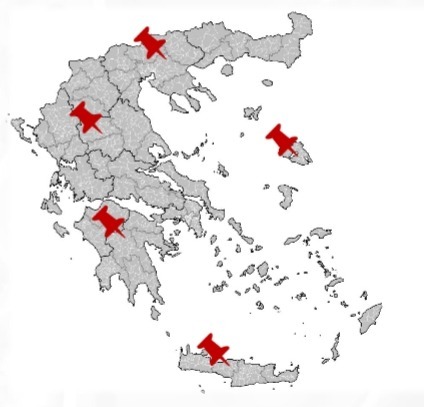
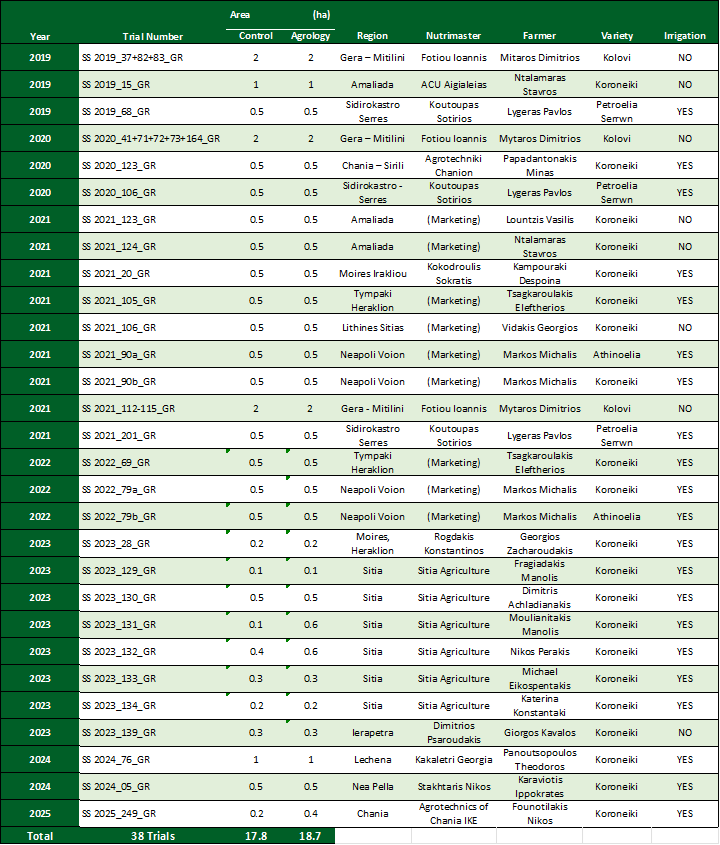
Identity of Success Stories (SS 2019 – 2025)
The results presented below concern a total of 38 field trials with a total area of 36.5 hectares, in various regions of Greece, in oil-producing olive trees, in the years 2019-2025.
Success Stories Goals
By applying Agrology’s Functional Crop Nutrition® products during specific growth stages, the farmer can achieve significant agronomic benefits for the crop.
The main Objectives of these Success Stories were as follows:
- Increase in Total Olive Oil Production
- Improvement in Olive Oil Quality and Organoleptic Characteristics
- Enhanced Plant Resilience to Summer Drought and Heat Stress
Agrology Functional Crop Nutrition® Program – Olives for Oil
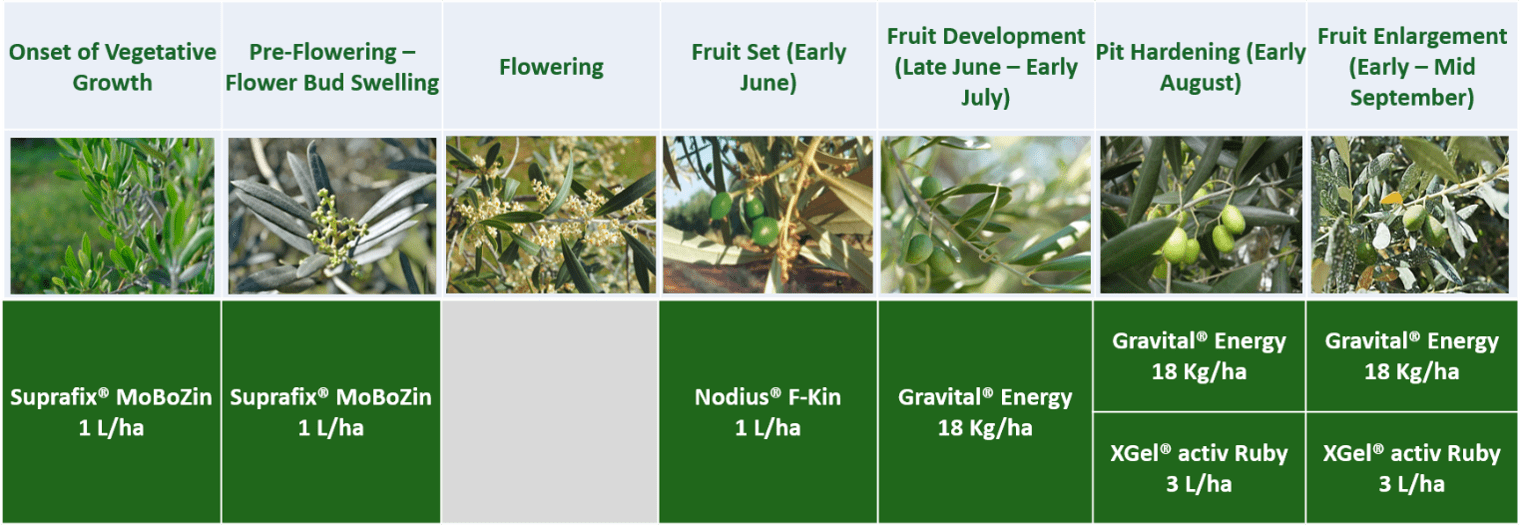
Functional Crop Nutrition Program® – Agrology Supplementary Applications
Products

Highly concentrated liquid Boron and Zinc in suspension concentrate form and reinforced with Molybdenum (Mo: 1% w/v, B: 15% w/v, Zn: 30% w/v)
- Flowering and fruit-setting Enhancement (Zn, B)
- Promotion of Vegetative Growth (Zn, Mo)
- Improved Fruit Development (B)
Application Timing
- Onset of Vegetative Growth
- Pre-Flowering
Recommended Dosage:
Foliar application – 1 L/ha

Natural Metabolic Catalysts, Amino Acids, and Trace Elements, activated with the E2DA® technology aiming at:
- Cell Divisions Increase
- Increasing Fruit Size & Weight
- Increasing Fruit Size & Weight Uniformity
Application timing:
- Fruit set
Recommended Dosage
Foliar application – 1 L/ha

Silicium (Si) Biostimulant, with high availability of Orthosilicic acid, the only assimilable form of Silicium by plants (92% w/w SiO2).
- It promotes photosynthesis and enhances Water and Nutrient Use Efficiency.
- Increases resistance to both abiotic and biotic stress factors, including thermal stress, water stress, salinity, and toxicity of elements.
- Enhances production and improves its quality.
- Facilitates the absorption of macronutrients such as Nitrogen, Phosphorus, and Potassium.
Application Timing
- Fruit Development (Late June – Early July)
- Pit Hardening (Early August)
- Fruit Enlargement (Early – Mid September)
Recommended Dosage:
Foliar application – 18 Kg/ha

15-10-50+3MgO+4SiO2
Complex Highly Concentrated product of Functional Crop Nutrition®, in the form of a thixotropic Gel, rich in Potassium, with Bioavailable Silicium of E-PerForm® Technology and Magnesium.
- Fruit weight increase
- Fruit ripening boost
- Increase of olive’s oil content
Application timing:
- Pit Hardening (Early August)
- Fruit Enlargement (Early – Mid September)
Recommended Dosage
Foliar application – 3 L/ha
Consolidated Success Stories Results
During the field trials, sampling was conducted in both the Control and Agrology Program treatments, while total yield was assessed at harvest. The Agrology Program significantly improved the agronomic performance of olive orchards for olive oil production, resulting in substantial benefits for growers.
Specifically, the following results were achieved:
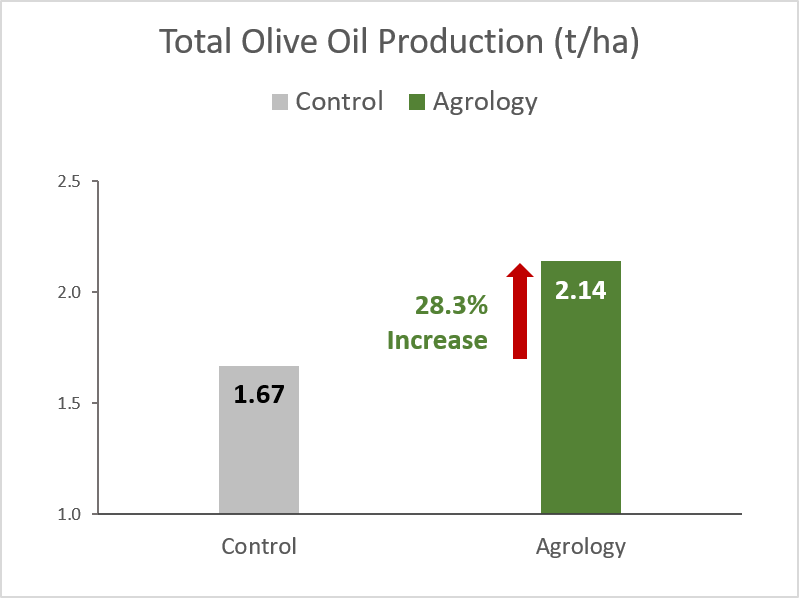
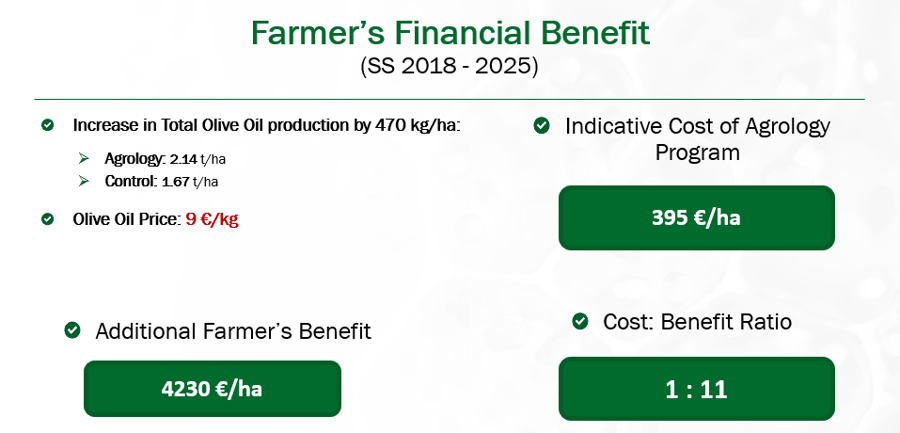
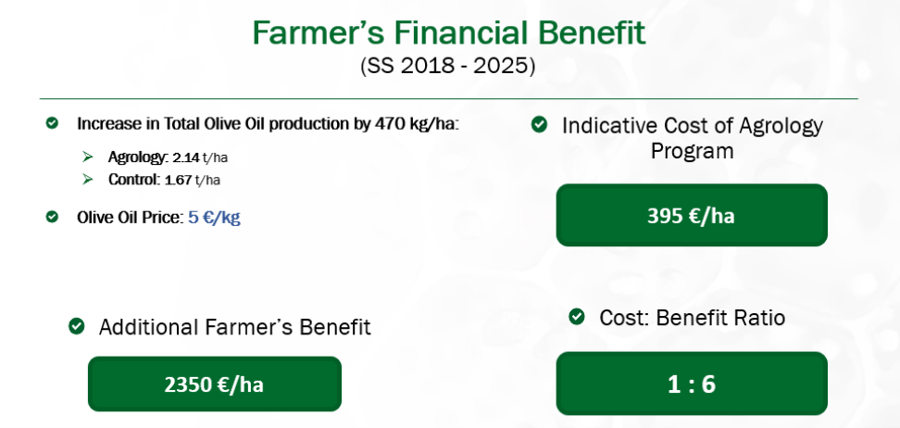
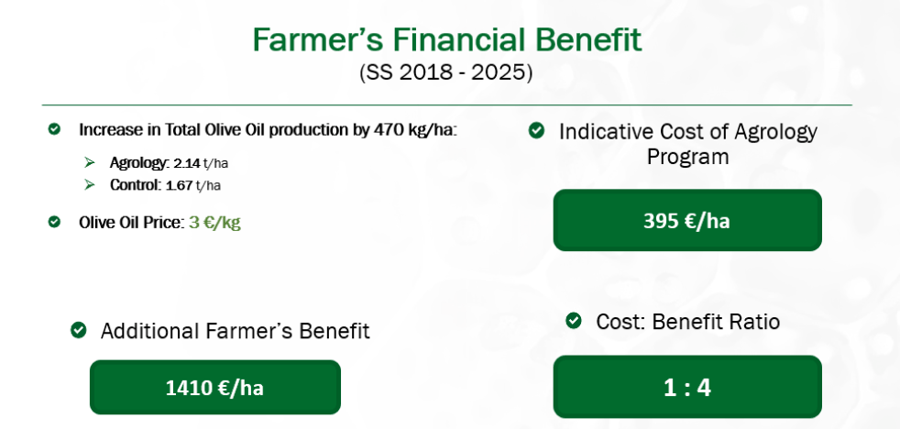
- Increase in Total Olive Oil Production by 28.3% (+470 kg/ha)
- Agrology: 2.14 t/ha
- Control: 1.67 t/ha
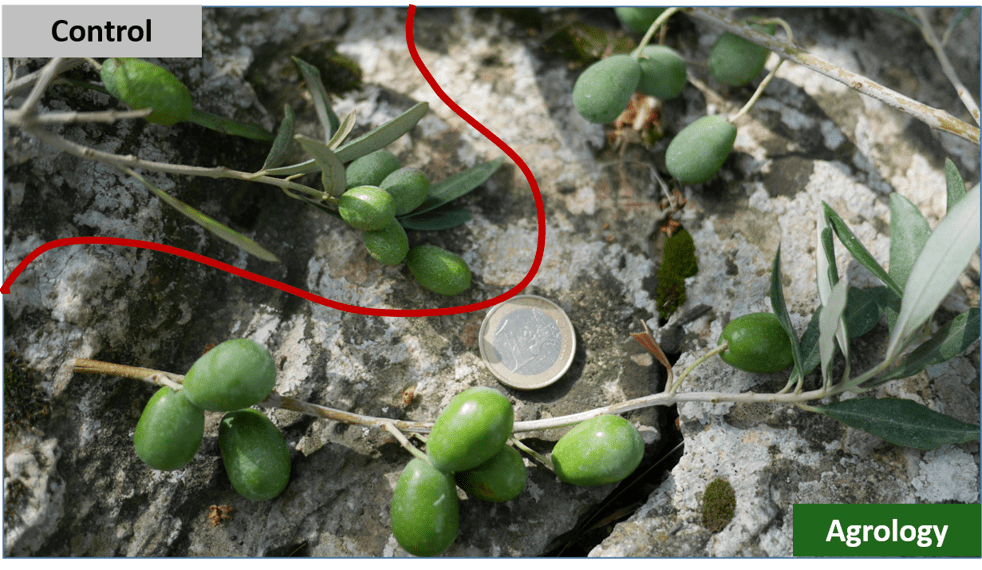
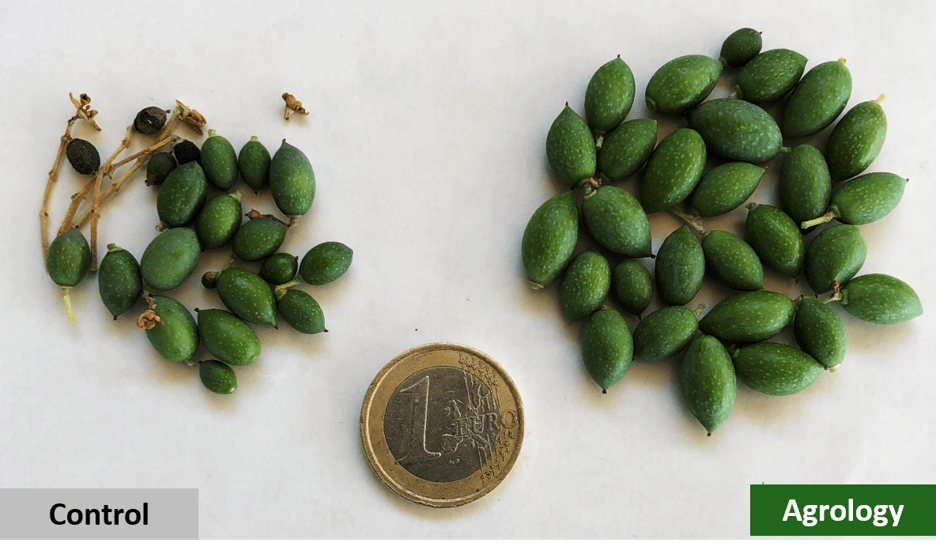
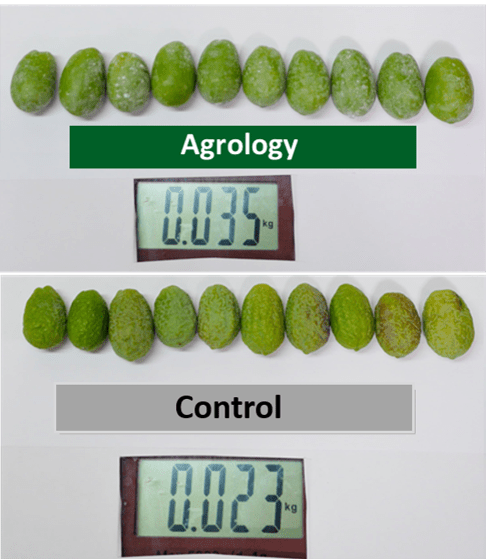
2. Increase in Fruit Size
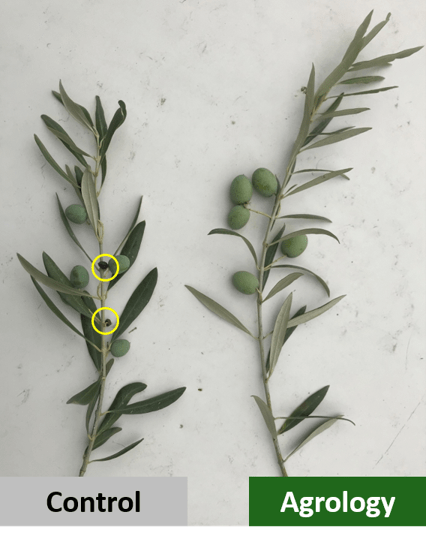
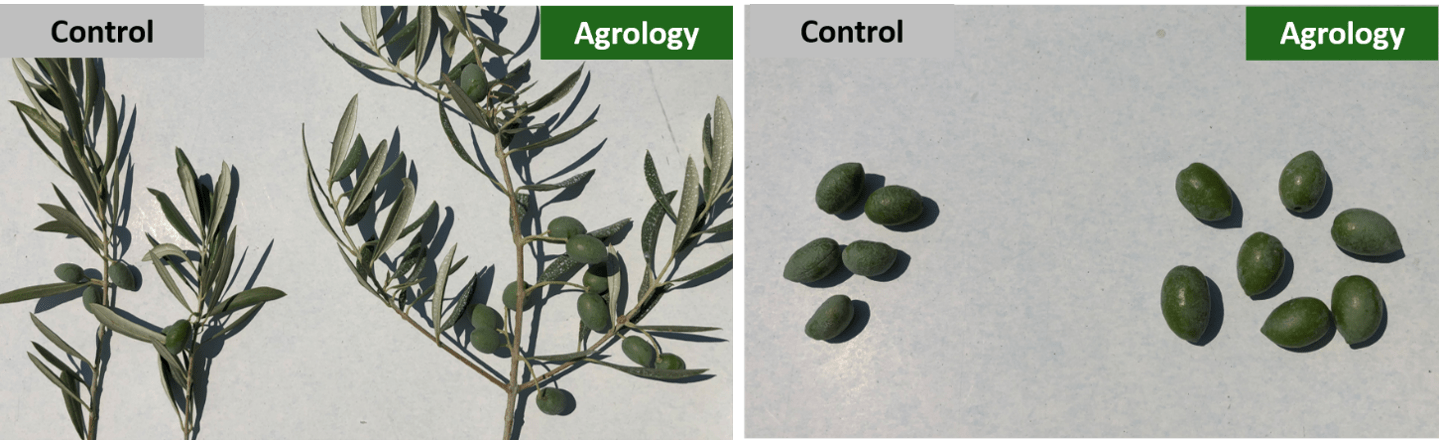
3. Increased resistance to abiotic stress factors
a) Average 52% Increase in Fresh Fruit Weight as a Result of Improved Protection Against Summer Heat Stress.
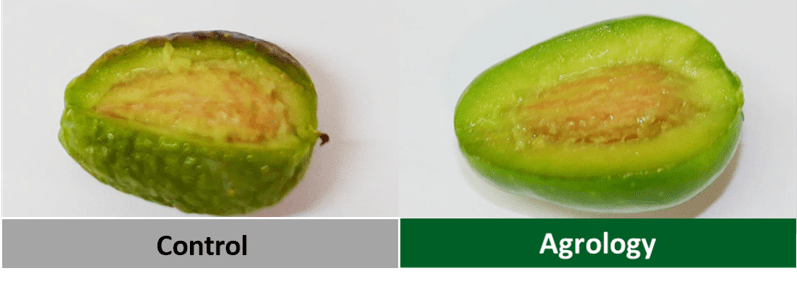
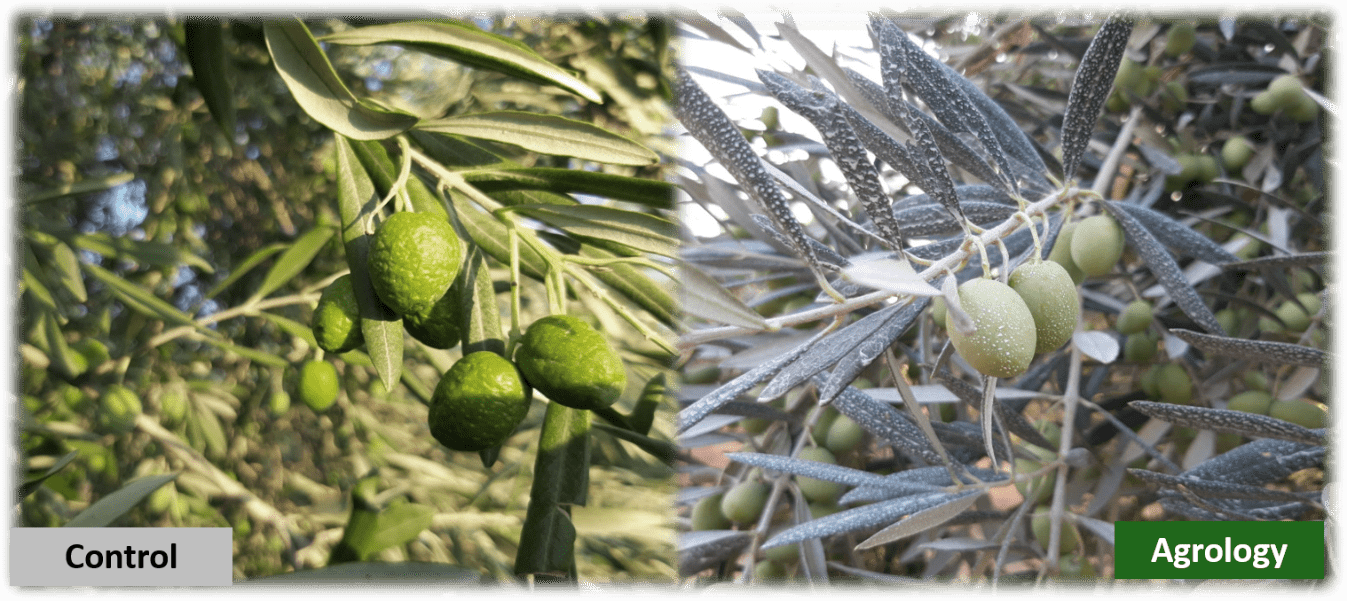
b) Foliar Application of Gravital® Energy in Olive Trees for Oil Production (Petroelia Variety)
- 2 Foliar Applications
- 1st application: Early July
- 2nd application: Early August
- No Rainfall for 4 Consecutive Months
- Irrigated Orchard
c) Foliar Application with Gravital® Energy (Arbequina Variety) – mid August
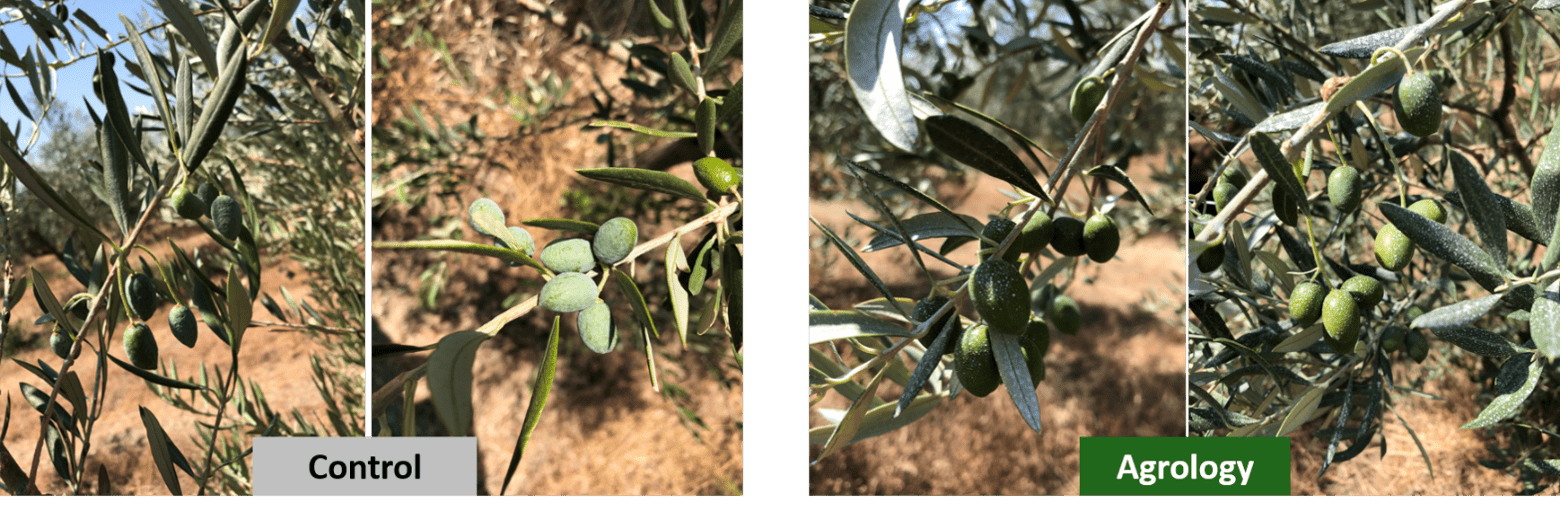
4. Leaf Analysis Results – Post Harvest (SS 2019_[37+82+83]_GR)
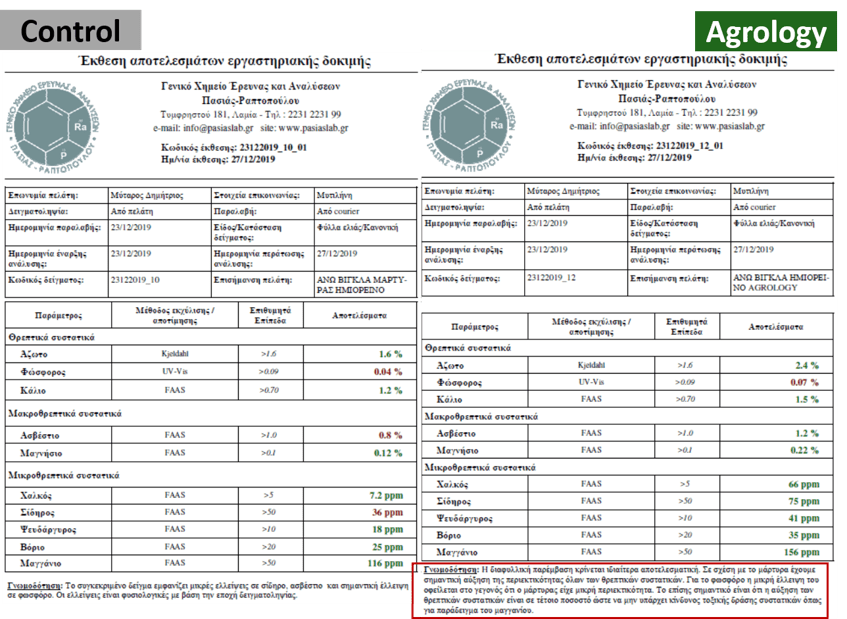
Leaf tissue analysis was performed on both the Control and the Agrology Program treatments after harvest.
Laboratory Assessment: The foliar application proved to be highly effective. Compared with the Control, the Agrology Program resulted in a significant increase in the concentration of all essential nutrients. The slightly deficient phosphorus level reflects its initially low concentration in the Control treatment. Equally important, the increase in nutrient concentrations remained within the optimal range, with no risk of nutrient toxicity, including micronutrients such as manganese.
5. Olive Oil Quality and Organoleptic Evaluation – Improvement of Olive Oil Quality Characteristics
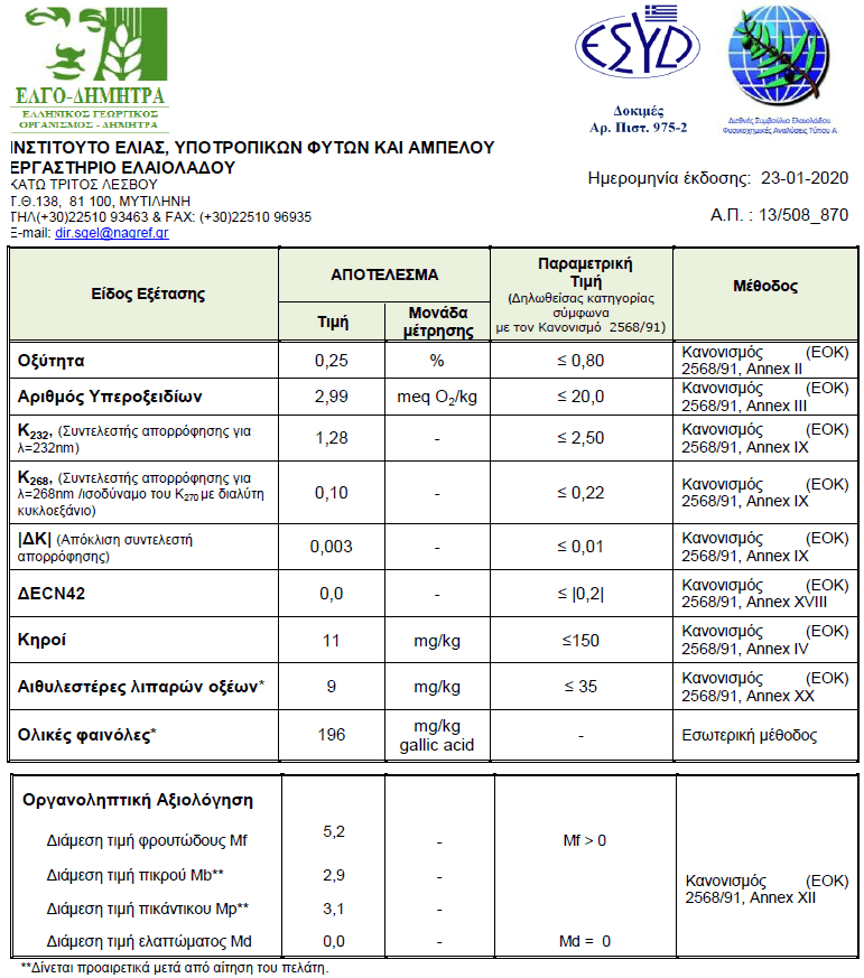
The analyses were carried out by Angeliki-Efstratia Kouzoumi, MSc, Head of the Mytilene Olive Oil Laboratory, Hellenic Agricultural Organization – ELGO DIMITRA, Institute of Olive Tree, Subtropical Plants and Viticulture (IOSV), Kato Tritos, GR-81100, Mytilene, Lesvos, Greece.
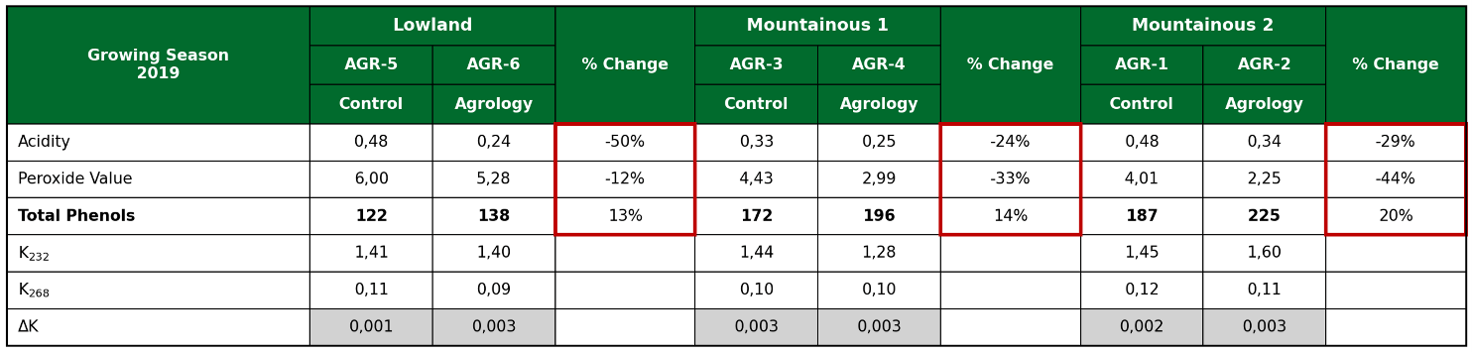
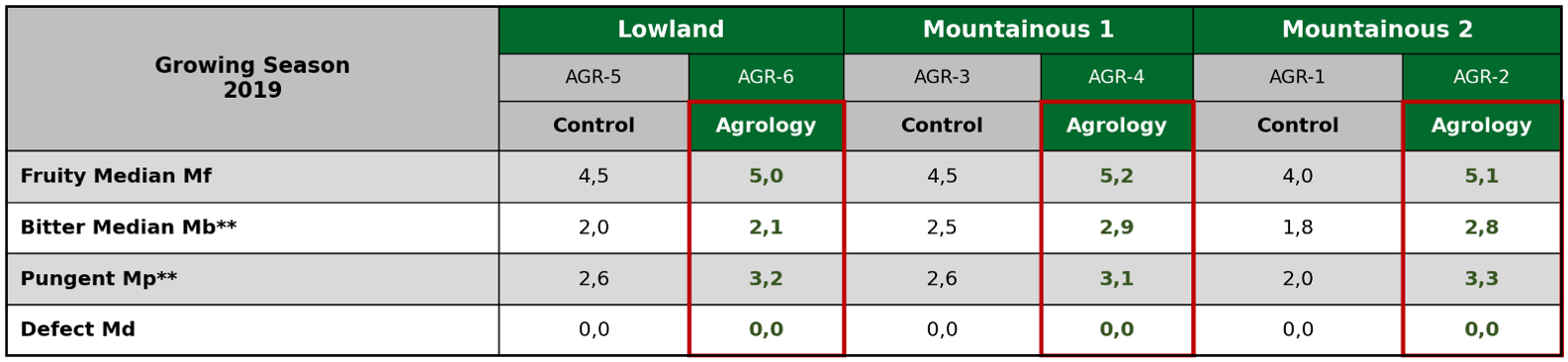
The Agrology Program treatments showed improvements in free acidity, peroxide value, total phenolic content, and the organoleptic characteristics of olive oil compared with Control.
6. Health Certificate for Olive Oil
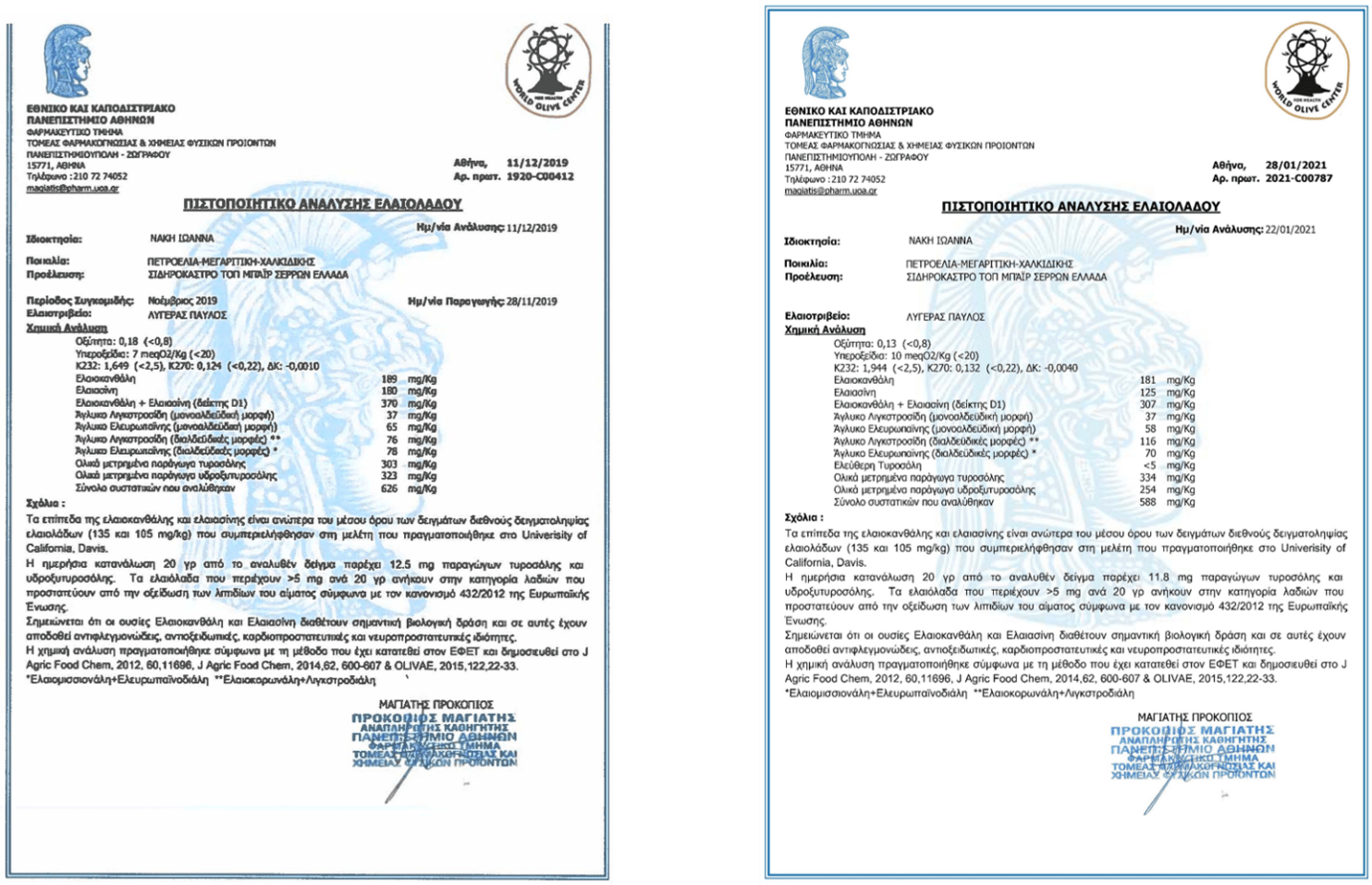
The World Olive Center Health Certificate verifies the concentration of bioactive phenolic compounds in extra virgin olive oil, including oleocanthal and oleacein, which are associated with important health benefits. It confirms whether the olive oil meets the requirements of the European Union Health Claim (EU Regulation 432/2012), demonstrating its ability to help protect blood lipids from oxidative stress. This certification provides independent scientific validation of the olive oil’s nutritional quality, functional value, and health-promoting properties.
Farmer’s Financial Benefit
The average increase in olive oil production of 470 kg/ha contributed to the increase of the farmer’s income, in various Olive oil prices.
Conclusion – Effects of Olive Functional Crop Nutrition® Program
AGROLOGY’s Functional Crop Nutrition®:
- Increases olive oil yield per tree
- Does not compromise the quality of the produced olive oil
- Can improve the quality and organoleptic characteristics of the produced olive oil
A self-evident investment:
- High olive oil price | Cost: Benefit ratio = 1: 11
- Low olive oil price | Cost: Benefit ratio = 1: 4
Obtain detailed information on Agrology’s Functional Crop Nutrition® Programs by the specialized staff of Agrology.
For further information, please contact us at: global@agrology.eu
“This experiment was conducted under specific field conditions and should not be applied as a standard without the guidance of an Agronomist or the Agrology Technical Department. In any case, Agrology Functional Crop Nutrition® products and programs must be applied according to the label or the instructions of the technician-agronomists.”