




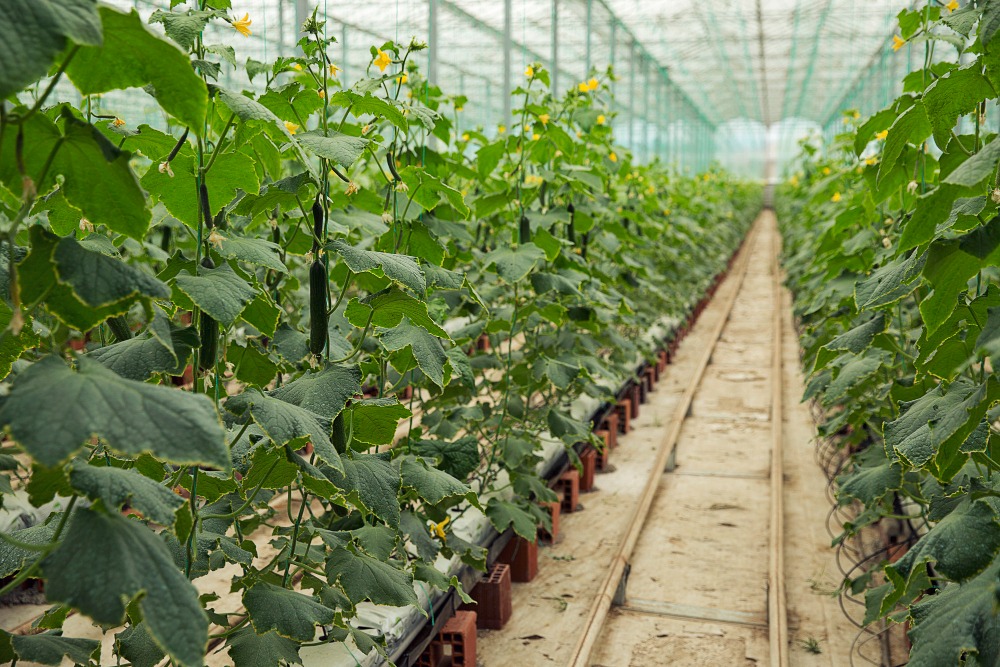
The Rise of Greenhouse Agriculture
Greenhouse farming has emerged as one of the most strategic tools for the future of global food systems, driven by climate instability, shrinking arable land, and rising demand for fresh, locally grown products. The global greenhouse market was valued at $32.8 billion in 2025 and is projected to reach $74.1 billion by 2033, growing at a Compound Annual Growth Rate (CAGR) of 10.9%.
This growth reflects a structural shift in how food is produced. Controlled-environment agriculture (CEA) offers farmers year-round production, protection from extreme weather events, and the ability to optimize crop inputs with a precision that open-field cultivation cannot match. Yet, these advantages come with their own set of agronomic challenges, particularly around nutrient use efficiency, abiotic stress management, and crop quality under high-intensity production conditions.
The Agronomic Challenge: High Demand, High Stress
Greenhouse crops are cultivated under continuous production pressure. Extended growing seasons, high planting densities, and fertigation-based nutrition systems place significant metabolic demands on plants. At the same time, climate extremes are intensifying, increasing the risk of temperature and water stress even within controlled environment.
Biostimulants, including seaweed extracts, amino acids, and beneficial microorganisms, have emerged as an innovative and scientifically supported approach to boost growth and productivity in horticultural crops under stress conditions. Their effectiveness is attributed to bioactive compounds such as polysaccharides, phytohormones, proteins, and micro- and macronutrients.
A recent meta-analysis estimated an average yield increase of approximately 18% from the use of biostimulants across crop types. The question for farmers is not whether biostimulants work in principle, but which products deliver consistent, measurable results under real production conditions.
Functional Crop Nutrition® in Greenhouse Environments
Agrology’s Functional Crop Nutrition® (FCN®) approach is built on the premise that crop nutrition and crop biostimulation are not separate disciplines. FCN® programs integrate targeted biostimulant applications at critical growth stages, designed to support nutrient assimilation, strengthen cellular structure, enhance root development, and prime the plant’s natural defense mechanisms against abiotic stress.
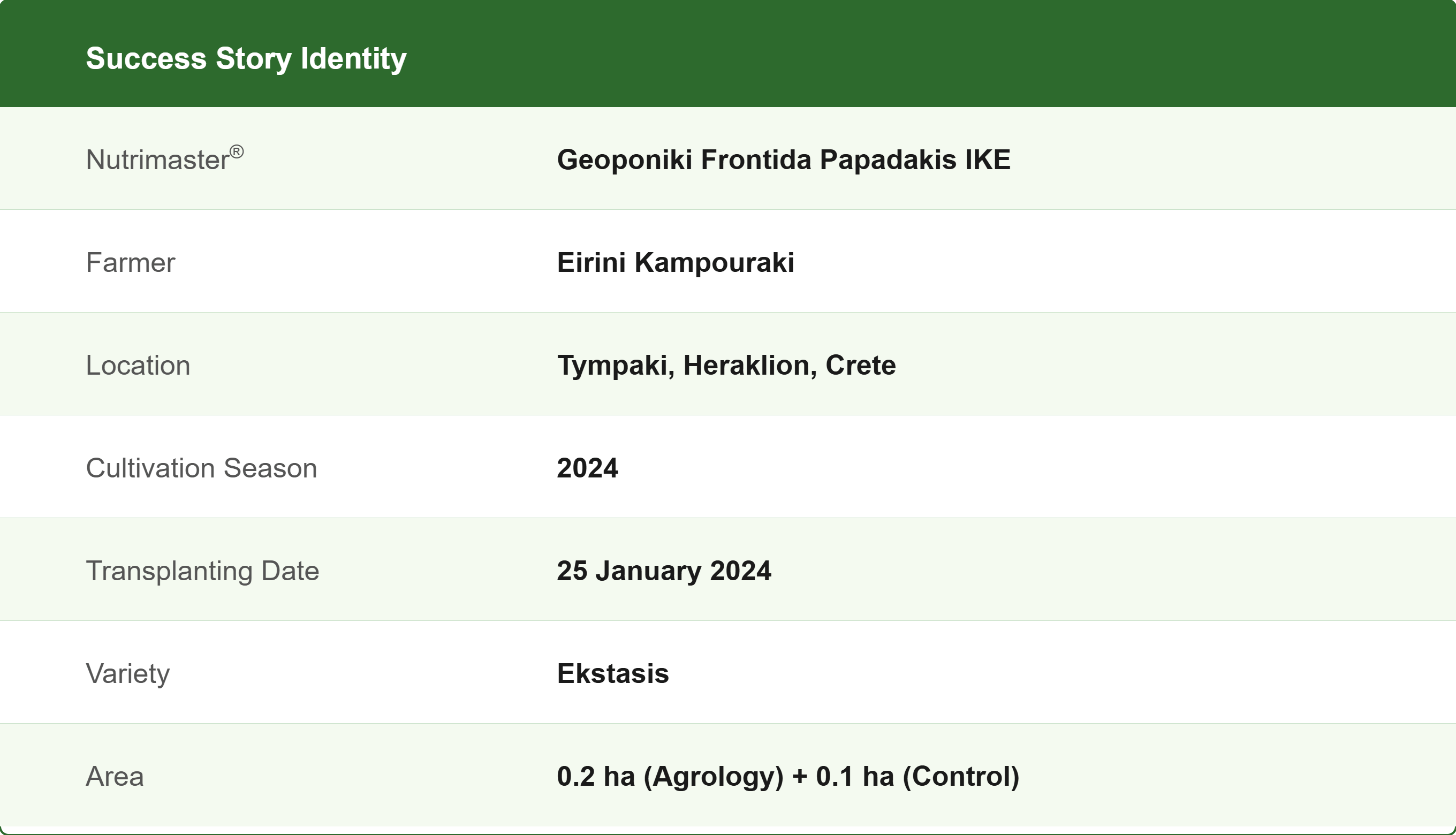
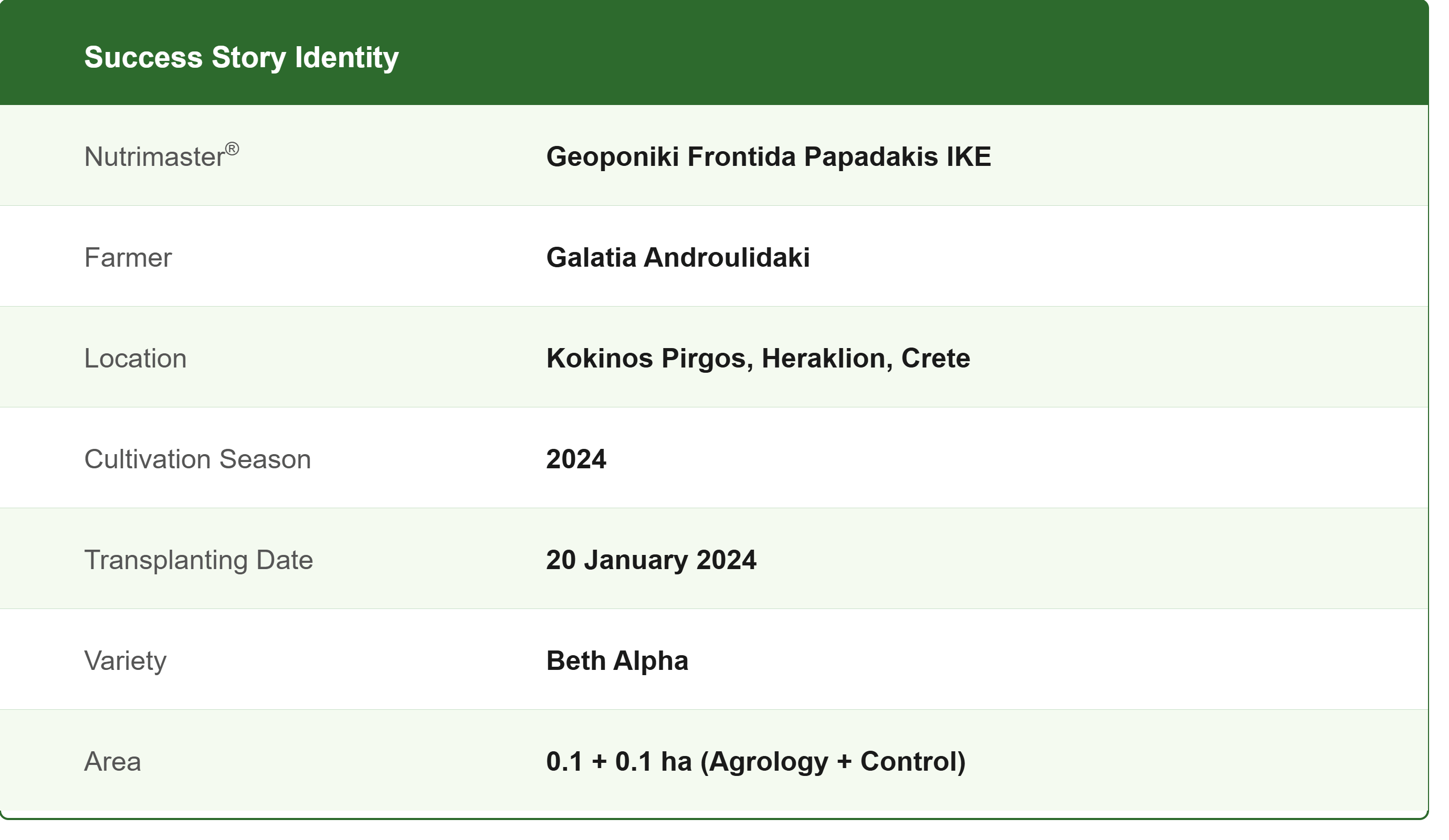
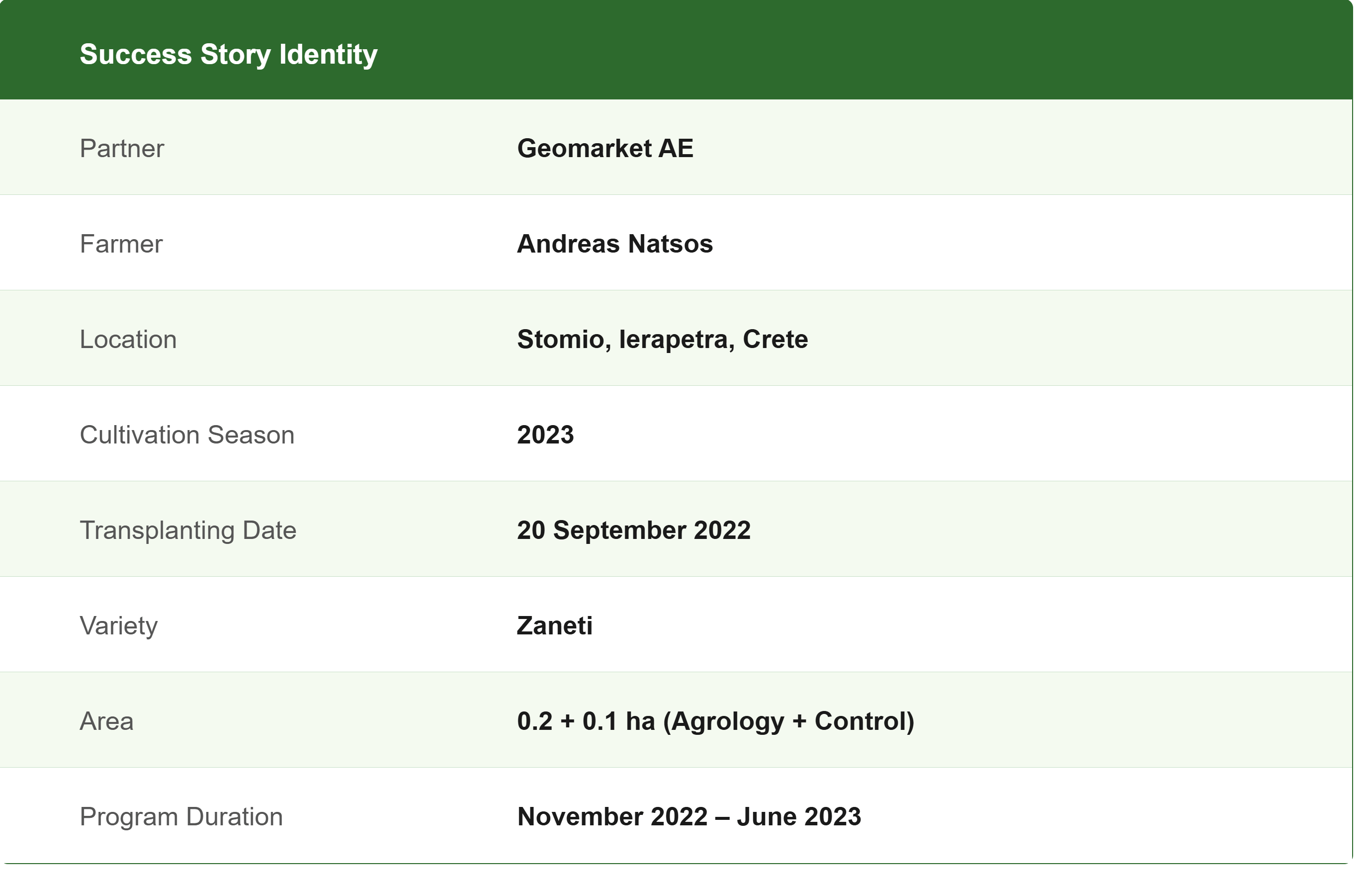
The following Success Stories document the application of FCN® programs in three greenhouse vegetable crops, each conducted by Agrology’s Agronomic R&D Department in collaboration with local farmers and Nutrimaster® partners. In each case, the greenhouse was divided into two plots, named Agrology Program and Control. The Control followed the standard plant protection and nutrition program used by the farmer. The Agrology Program applied the same program, supplemented with FCN® products at specific growth stages.
Success Story 1: Greenhouse Tomato — +26.7% Yield Increase
FCN® Supplementary Applications
1. Gravital® Force SC is a premium Silicium and calcium biostimulant (35.0% w/v SiO₂, 35.0% w/v CaO) with a high percentage of bioavailable orthosilicic acid.
Key Benefits
- Improves the uptake and utilization of N, P and K
- Reinforces cell wall integrity through calcium and silicon nutrition
- Enhances plant resilience against abiotic stresses, such as heat and draught
- Promotes fruit firmness, superior quality and extended postharvest shelf life
- Applied via fertigation in seven applications (10 L/ha each) at 10-day intervals, beginning at fruit set
2. Dynax® Core – Acidic solution with 75% Humic & Fulvic refined extracts from Leonardite (with a natural ratio of Fulvic to Humic acids at 30:70), 5% Ascophyllum nodosum extract, 20% mixture of Carboxylic acids and Organic Prebiotics, with additional components including 0.1% Molybdenum (Mo) and 0.05% Cobalt (Co).
Key Benefits
- Stimulates root system, promotes crop vigor, protects against oxidative stress from soil salinity and abiotic stress factors
- Promotes phosphorus release from the soil, increasing its availability to plants, while stimulating nitrogenase enzyme synthesis
Applied via fertigation in five applications (20 L/ha each) at 15-day intervals, beginning at the onset of flowering.
Results
- Total Yield Increase by 26.7% (+15.9 t/ha), compared to Control
Success Story 2: Greenhouse Cucumber — +18.7% Yield Increase
FCN® Supplementary Applications
1. Titonic® Trinity – Functional Crop Nutrition® product with a balanced NPK ratio (21-21-21 +Ti+TE), fortified with bioactive Titanium of the E-PerForm® Technology.
Key Benefits
- Activates enzymes, participates in chlorophyll synthesis, strengthens endogenous defense mechanisms, increases Nutrient Use Efficiency
- Enhances Vegetative Growth, flowering and fruit set
Six foliar applications of 4 L/KL at 10-day intervals, beginning at pre-flowering.
2. XAct® PRO Fort SC – Nanotechnology formulation of Nano-Cu and Nano-Zn particles enhanced with Calcium, Boron, Molybdenum, and Sulfur, activated with E2DA® Technology.
Key Benefits
- Protects plants and yield from (a)biotic stressors, leading to crop overall health improvement. It nourishes crops, promoting photosynthesis, protein synthesis and flowering, while increasing fruit setting and flesh firmness, significantly extending shelf life
- Covers immediate and long-term Cu and Zn needs, enhances fruit setting, and crop vigor
Applied as six foliar sprays (0.375 L/KL each) at 10-day intervals, beginning at the pre-flowering stage.
Results
- Total Yield Increase by 18.7% (+9.4 t/ha), compared to Control
- Farmer observations also reported more vigorous plants, enhanced flowering, and deeper green foliage color in the Agrology treatment compared to the Control.
Success Story 3: Greenhouse Pepper — +17.1% Yield Increase
FCN® Supplementary Applications
1. Suprafix® MoBozin – Molybdenum, Boron and Zinc formulation, enhanced with SmartFlow® & E2DA® Technology, ideal for foliar application and for use with drip irrigation. (Mo: 1% w/v, B: 15% w/v, Zn: 30% w/v).
Key Benefits
- Vegetative growth promotion
- Flowering enhancement
- Fruit setting increase
- Fruit development improvement
Four foliar applications of 100 cc/100 L were carried out every 30 days, starting in November.
2. Fruitonic® Vita – Mixture of highly concentrated plant-based free L-amino acids and peptides, fortified with vitamins B1, B2, and C.
Key Benefits
- Enhancement of plant metabolism, flowering and fruit setting, cell division, resistance to abiotic stress
Four foliar applications of 300 cc/100 L were carried out every 30 days, starting in November
3. Gravital® Force SC – as described in Success Story 1.
Fourteen fertigation applications of 15 L/ha were carried out every 15 days, starting in November.
4. XGel® activ Ruby – Complex highly concentrated FCN® product in thixotropic gel form (15-10-50+4SiO₂+3MgO), rich in Potassium with bioavailable Silicium (E-PerForm® Technology) and Magnesium.
Key Benefits
- Fruit size and weight increase, improvement of quality characteristics, fruit ripening enhancement
Fourteen foliar applications of 300 cc/100 L were carried out every 15 days, starting in November.
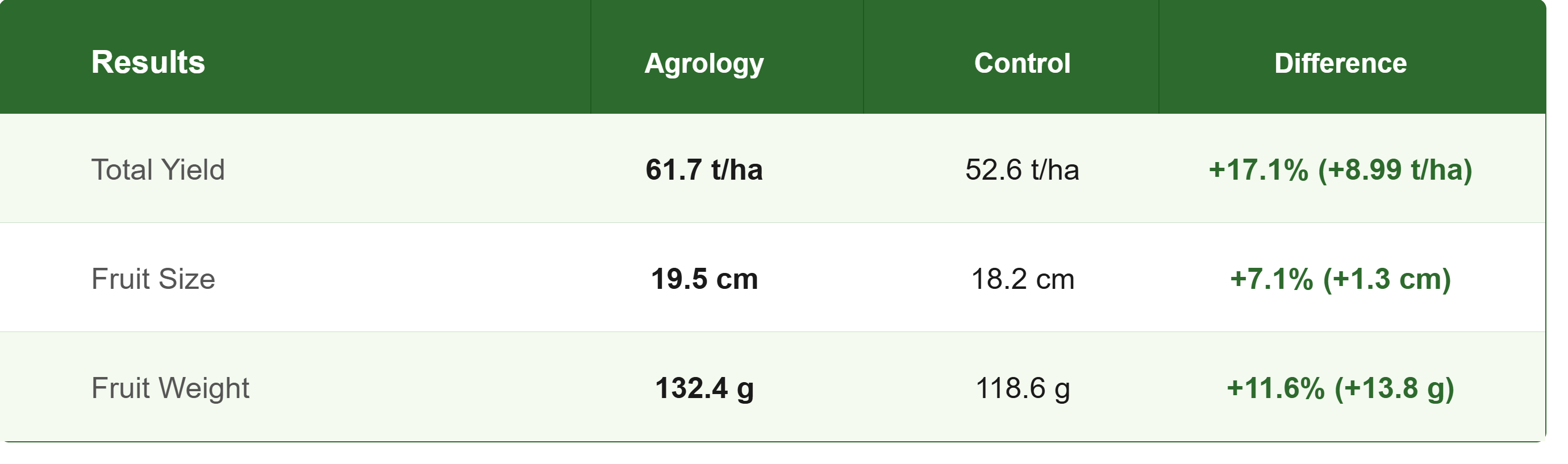
Results
Conclusions
Across three greenhouse crops and two production years, the application of Agrology’s Functional Crop Nutrition® programs delivered consistent and measurable improvements in total yield, fruit quality, and plant vigor.
These outcomes are consistent with the broader scientific evidence on the role of biostimulants in greenhouse horticulture. The integration of Silicium, bio-active Titanium, seaweed extracts, amino acids, and nanotechnology-based micronutrients at critical growth stages addresses the primary agronomic challenges of high-intensity greenhouse production, from nutrient use efficiency to abiotic stress resilience and postharvest quality.
These experiments were conducted under specific greenhouse conditions and should not be applied as a standard without the guidance of an Agronomist or the Agrology Agronomic R&D Department. Agrology Functional Crop Nutrition® products and programs must be applied according to the label or the instructions of the agronomists.
👉 For more information, please contact us at: global@agrology.eu or fill out the form below.
Contact us
Leave your details below and we will reach out to you with more information!
Sources and References
- Grand View Research (2025): Greenhouse Market Report. https://www.grandviewresearch.com/industry-analysis/greenhouse-market-report
- Lau S-E, Lim LWT, Hamdan MF, et al. Enhancing Plant Resilience to Abiotic Stress: The Power of Biostimulants. Phyton-International Journal of Experimental Botany, 2025, 94(1): 1-31. https://doi.org/10.32604/phyton.2025.059930
- Li J, Van Gerrewey T and Geelen D (2022) A Meta-Analysis of Biostimulant Yield Effectiveness in Field Trials. Front. Plant Sci. 13:836702. doi: 10.3389/fpls.2022.836702